
Rail & Road
Tram, metro and light rail are legal categories more than vehicles
What separates urban rail modes is not the size of the train but whether it shares space with traffic, and that difference decides speed, reliability and how it is signalled.
By Pranav Kulkarni4 min read
The dividing line is the right of way
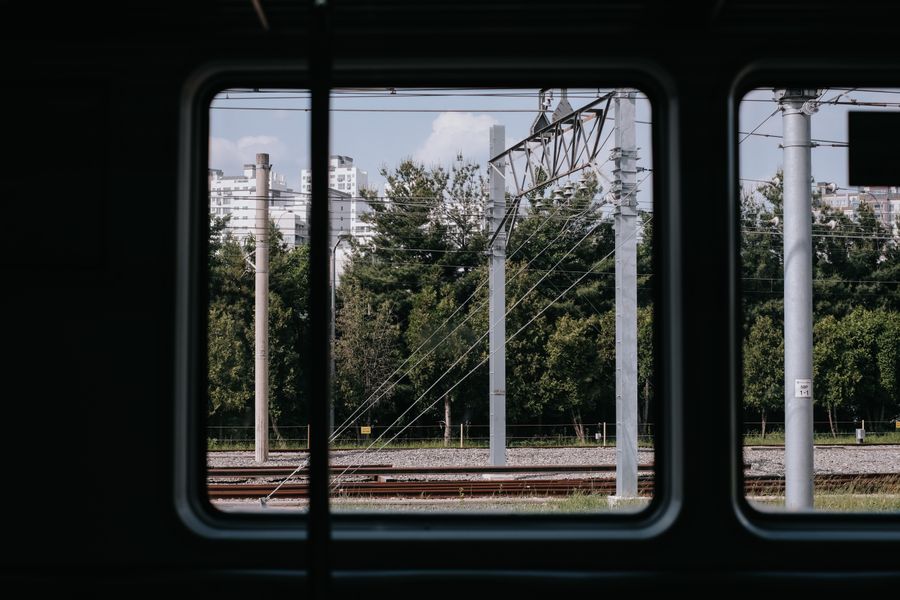
The useful question about any urban rail line is not what the vehicle looks like but whether anything else can get in its way. A line with its own sealed alignment, whether underground, elevated or fenced at ground level, can run to a timetable of its own. A line sharing a street with cars cannot, because its punctuality is hostage to the traffic around it.
Everything else follows from that. Segregated lines can run frequently and reliably, be signalled automatically, and in some cases run without a driver, because nothing unexpected can appear on the track. Street-running lines are cheaper to build by a wide margin and are slower and less predictable in exchange.
This is why the same vehicle can be a tram in one district and something closer to a metro in the next, running in the street through the centre and on a reserved alignment out to the suburbs. Many networks are exactly this hybrid, and the labels struggle with it.
Signalling and stopping distance explain a lot of the difference
A tram driver drives on sight, in the way a bus driver does, and the vehicle is built to stop within the distance the driver can see. That is possible because trams are relatively light and not very fast in traffic. It is what allows a tram to run down a street at all.
A metro train cannot do this. It is heavier, faster and often in a tunnel, so it stops in far more than the visible distance and must be protected by a signalling system that keeps trains apart automatically. That system is expensive, and it is a large part of why metro construction costs what it does.
Light rail sits between the two and usually adopts whichever regime the section requires, which is why some systems change operating rules at a specific point on the line. Passengers notice this as a change in speed and in how often the vehicle stops.
Cost is the reason cities choose one over another
Building underground is extraordinarily expensive, and the cost is dominated by tunnelling, stations and the diversion of everything else buried under a city. Building on the street costs a fraction of that, which is why tram networks have expanded in many cities where a metro was discussed and never funded.
Capacity is the counterweight. A segregated line can move a great many more people per hour than a street line, because it can run longer vehicles closer together, so cities with the demand to justify it eventually need the expensive option regardless.
There is a real and continuing argument in transport planning about which delivers more for the money, and the answer depends on density, on how much street space a city is willing to take from cars, and on what it already has. Anyone who tells you one mode is simply better is skipping the local conditions that decide it.
Why old tram networks disappeared and then came back
Across much of the world tram systems were removed in the middle of the twentieth century, in favour of buses and private cars, on the grounds that rails in streets were inflexible and obstructive. Several cities dismantled comprehensive networks within a few years.
The reversal since has been driven by different priorities: capacity, air quality, the desire to make city centres less car-dominated, and evidence that permanent infrastructure attracts investment along a route in a way a bus route does not. Whether that last effect is caused by the tram or merely accompanies it is genuinely disputed among planners.
A few cities never removed theirs, and those networks are now studied precisely because they kept running through the decades when everyone else was tearing up the track. Riding one is a reminder that the modern tram revival is a return rather than an invention.
What this means when you are standing at a stop
Reading which regime you are in tells you what to expect. If the line has its own alignment and platform-edge doors, the service will be frequent enough that a timetable is irrelevant. If it runs in a street with car traffic crossing it, the published times are aspirations and the interval between vehicles will bunch.
Ticketing usually differs too. Segregated systems tend to use barriers and a controlled area, while street systems rely on validation and inspection, with fines for travelling unvalidated. Getting this wrong is one of the most common and most avoidable ways for a visitor to be penalised.
Where a city has several modes on one ticket, the map often flattens the distinction and shows them as similar lines. The journey does not flatten. A route that mixes a segregated line and a street line will be as reliable as its worst section, which is worth knowing when a connection matters.
Common questions
Why do some trams run underground in the city centre?
Because the centre is where street congestion hurts most and where demand is highest, so cities have often tunnelled the central section while leaving the outer branches on the surface. These systems are usually described with their own local term, since they are neither one thing nor the other.
Is light rail just a marketing name for a tram?
Partly, and the terminology genuinely varies between countries and even between systems. The substantive difference, where there is one, is the proportion of the route that is segregated, which is what determines whether it behaves like a tram or like a metro.
Do driverless metros actually run with nobody on board?
Some do, on fully segregated lines with platform-edge doors, and they have been operating for decades in several cities. Staff are still present in the system and often on trains at busy times, and the automation is possible only because nothing can reach the track.
Consumer editor, The Next Postcard
Pranav joined to cover cities, slow routes, rail & road and stayed for the awkward questions and is happiest when a piece answers the question completely.


