
Cities
Opening hours are a city timetable and they are not decoration
When shops shut, when lunch happens and when dinner starts are set by law, climate and the shape of the working day, and reading them is easier than fighting them.
By Anjali Raghunathan4 min read
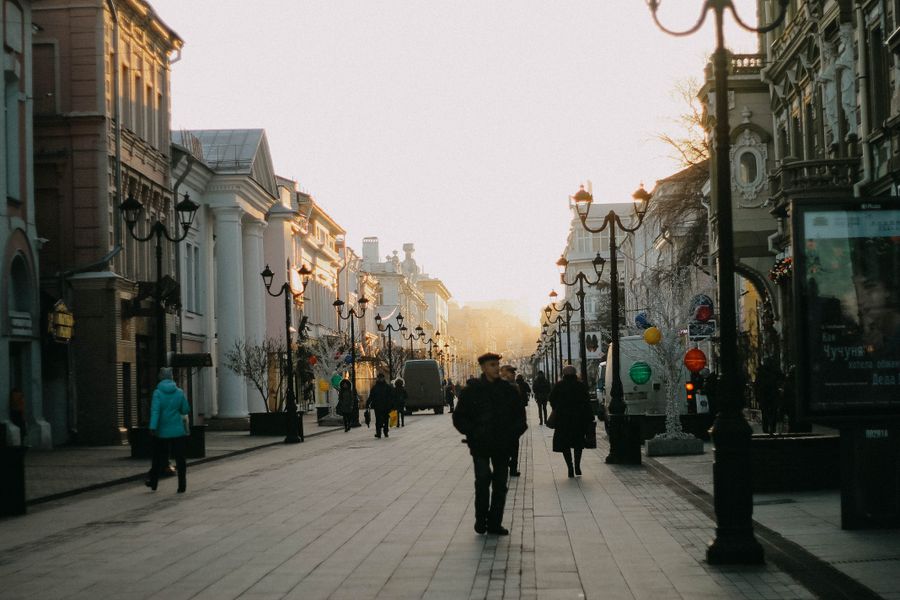
Three forces set the hours, and they are often in tension
The hours a city keeps are the product of three things stacked on top of each other. There is law, which decides what may open and when. There is climate, which historically decided when it was possible to work outdoors and how the day was split. And there is custom, which is the residue of both after the original reasons stopped applying.
Because the three change at different speeds, they frequently contradict one another. A country may have liberalised its trading law decades ago while a particular sector still closes on the old afternoon, purely because everyone in that trade expects it to. Visitors read this as charming inconsistency; it is really just two layers of history that have not finished merging.
The practical upshot is that no single rule covers a country, let alone a continent. What you can do is learn which force dominates where you are, because that predicts what will be closed and, more usefully, what will not.
Sunday, and whatever the local equivalent is
In much of Europe the legal position on Sunday trading is genuinely restrictive rather than a matter of preference, with exemptions carved out for particular kinds of business — stations, fuel, pharmacies on a rota, bakeries for part of the morning, tourist zones in some cities. The effect on a visitor is dramatic. A district that was crowded on Saturday can be almost entirely shuttered, while parks, museums and restaurants are at their busiest.
Elsewhere the quiet day falls on a different day of the week, or is compressed into part of a day, or applies to public offices but not to shops. There is no continental pattern to memorise. The single most useful question to ask on arrival is which day things close, and the answer is usually given without hesitation because everyone local organises their week around it.
The midday break and why it has not disappeared
A long midday closure exists in various forms around the Mediterranean and in parts of Latin America, and its origin is straightforwardly practical. Where the middle of the day was too hot to work outside for several months a year, the day was split into two working periods with a long gap, and everything else — meals, shop hours, school timetables — arranged itself around that split.
Air conditioning and office work have weakened the original reason, and in large cities the long break has substantially eroded. It survives most strongly in small towns, in family-run businesses and in trades where the proprietor lives above the shop. So the reliable version of the rule is not national but scalar: the smaller the place, the more likely the afternoon closure is real.
Where it exists, it moves everything downstream. If the working day ends late because it started again at four or five, then dinner cannot be early, and a restaurant that opens for the evening at seven will be empty until nine. The late dinner is not a cultural quirk floating free of anything; it is the last link in a chain that starts with the afternoon.
Meal times are the hours that catch travellers out hardest
Kitchens keep narrower hours than dining rooms, and in a great many countries a restaurant that appears open at four in the afternoon will serve you a drink and nothing else. This is the single most common way a day goes wrong for someone travelling: arriving hungry in the gap between service periods, in a place where the gap is genuinely enforced.
It is worth saying plainly that tourist districts have often abandoned all of this and serve continuously. That is a convenience and also a signal — continuous service in a country that does not otherwise do it tells you exactly who the establishment is aimed at.
Reading the hours instead of resisting them
The version of a city that runs on visitor time — continuous service, English menus outside, everything open on the quiet day — is a real place and a thin one. It exists because visitors keep different hours than residents, and every hour you spend inside it is an hour spent among other visitors.
Shifting onto local time is mostly a matter of eating when the place eats, which sounds trivial and is the single change that most alters what a stay feels like. It moves you into rooms full of people who live there, at prices set for them, at a pace set by them.
There is a limit to this. Some hours simply do not suit some travellers, and a family with small children cannot reasonably start dinner at half past nine. That is a legitimate constraint rather than a failure of curiosity, and the fix is the same in either case: know what the hours are before the day starts, and build the day around them.
Common questions
How do I find out the local holiday calendar reliably?
Look for the calendar published by the country or region rather than a general travel page, because regional holidays are common and often omitted elsewhere. Where a city has its own patron saint day or local festival, that day can close more businesses than a national holiday does.
Do museums follow the same closing days as shops?
Usually not, and often deliberately the opposite. Many museums close for one weekday instead, historically the day after the busiest one, so a Monday closure is common in some countries and a Tuesday closure in others. Check individually; there is no rule that generalises.
Is the long midday break disappearing?
It has clearly weakened in large cities and in chain retail, and it persists in smaller towns and independent businesses. Whether that counts as disappearing depends on where you are standing, which is why national generalisations about it are usually wrong in one direction or the other.
Editor, The Next Postcard
Anjali has been reporting on cities, slow routes, rail & road since long before it was fashionable and reads the small print so you do not have to.


