
Cities
What a city eats changes by district, and the rent is usually why
Restaurants occupy whatever space they can afford with enough passing custom to fill it, and that one constraint sorts a city into eating districts.
By Arjun Nair4 min read
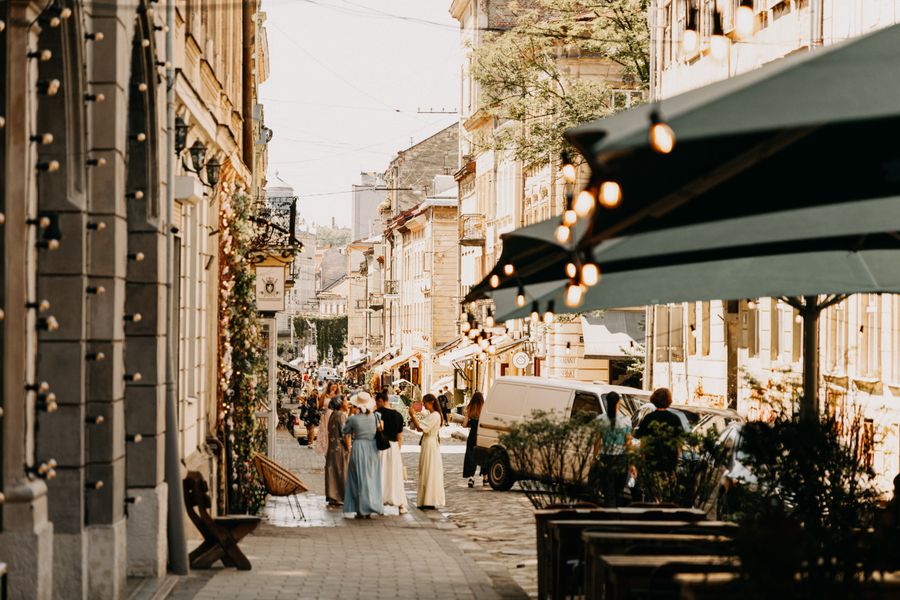
The food map and the rent map are close to the same map
A kitchen is an expensive thing to run and a thin thing to profit from, so the rent per square metre sets a ceiling on what a place can charge and therefore on what it can sensibly cook. Districts do not choose a cuisine. They inherit whichever businesses could pay the rent on the day the lease was signed, and the food of a street is the residue of twenty such decisions taken over thirty years.
This is why the interesting eating in a lot of cities has been drifting outwards for decades. Once a central ground floor is worth more as a phone shop than as a dining room, the family restaurant that had been there since the sixties does not win that argument. It closes, or it moves two tram stops out, and the cooking follows the rent rather than the other way round.
The useful corollary is that you are looking for a ring rather than a centre.
Arrivals write themselves into a street of restaurants
Wherever people have arrived in numbers, the food arrives with them, and it lands first where housing was cheapest at the time. That is rarely the prettiest quarter and it is almost never the one on the postcard. It is usually near a station, near a former industrial edge, or in whatever housing stock the city had spare in the decade the arrivals happened.
What makes this readable is that the food stays put long after the population has moved on. A district can be halfway through a complete change of residents while the shops still stock the ingredients of the last community, because a specialist grocer serves a whole city and not merely the streets around it. So a street of restaurants is a layered record rather than a snapshot.
The second and third generations of a cuisine look different from the first, too. Early on, a restaurant cooks for people who already know the food and would notice a shortcut. Later, the same kitchen is cooking for a wider room, and the menu widens with it. Neither version is fake; they are aimed at different audiences.
A market sets the range of what the kitchens around it cook
Wholesale and retail markets exert a pull that shows up within a few hundred metres. Restaurants near a produce market can buy in small quantities early and change the menu on the day, which is only possible when the supply is a short walk away rather than a delivery slot. The result is a cluster of places with short menus and daily specials, and the cluster stops fairly abruptly where the walk stops being convenient.
Fish is the clearest case because it is the least forgiving. A district with a landing quay or a fish market keeps a concentration of places willing to sell it, and the further you go from that point the more likely you are to be eating something that arrived frozen, which is simply a different product.
Markets also anchor the eating that happens before the city is awake. Traders keep hours nobody else does, so the counters serving them open absurdly early and close by mid-afternoon, and those counters are frequently the best-value hot food anywhere near the middle of a city.
The centre eats for visitors and the ring eats for residents
A restaurant in a heavily visited quarter faces a customer it will never see again. Nothing about that arrangement rewards consistency, and the businesses that survive there tend to compete on position and on turnover rather than on whether anyone comes back. That is a structural pressure rather than a moral failing, and plenty of good places resist it, but the pressure is real and it is strongest exactly where the sights are.
Move out to a district where the customers live and the incentives reverse. The same twenty families come in every fortnight, complaints travel, and a bad month is visible immediately. Prices in that setting are set against what local households will pay for an ordinary evening out, which is a far tighter constraint than what a visitor will pay once.
None of this means the centre is a write-off. It means the centre is where scepticism earns its keep: a menu in six languages, a photograph of every dish, and somebody standing outside inviting you in are all signals about the business model.
Breakfast is the most honest meal in a district
What a neighbourhood sells at eight in the morning is aimed almost entirely at people who live or work there, because visitors are generally not out yet. A district full of workers has counters selling something quick and hot. A district of offices has a queue for coffee and very little else. A residential district has a bakery doing most of the volume of its day in ninety minutes and then going quiet.
Watch the takeaway habits too, since they say more than the menus do. Whether people stand at a counter, sit down, or carry food away and eat it walking is set by local convention and by the shape of the working day.
One caveat is worth keeping in view. All of this reads a district as it is now, and cities change fast at the edges of the centre, so a food map that was accurate five years ago may describe a street that has since been priced out entirely.
Common questions
Is the rule about avoiding restaurants near a major sight actually reliable?
It is a tendency rather than a law, and it holds more strongly the more concentrated the visitor traffic is. In a city where visitors are spread thinly, the distinction almost disappears. Treat proximity to a famous view as a reason to look harder, not as an automatic disqualification.
How do I find the market that shapes a district?
Look for the wholesale market rather than the tourist-facing hall, since the wholesale site is the one that determines supply. Municipal websites usually list them, and the giveaway on the ground is small vans double-parked at an hour when nothing else is happening.
Does this work in cities without much of a restaurant culture?
The mechanism holds but the outlet changes. Where eating out is not the norm, the same signals appear in grocers, bakeries and butchers instead, and reading which specialist shops survive on a street tells you the same thing about who lives there.
Features writer, The Next Postcard
Arjun has written about cities, slow routes, rail & road for most of the last decade and prefers a plain explanation to a clever one.


