
Slow Routes
Flying compresses distance and overland travel hands it back
A flight removes the gradient between two places, and the gradient is the part that explains how they are related.
By Pranav Kulkarni4 min read
What a flight actually removes
A flight does not simply move you quickly. It removes the middle entirely and replaces it with a sealed interval that is the same regardless of where you are going: a departure hall, a queue, a cabin, a descent. Whatever lies between the two ends of the journey is not merely passed over. It is deleted from the experience.
The result is that two places become adjacent in your head without being connected. You know the food is different, the language is different, the buildings are different, but you have no account of how one became the other, because you never saw a single intermediate state. It is the difference between reading two pages of a book and reading the chapter that joins them.
None of this is an argument against flying, which is often the only sensible option and sometimes the only possible one. It is an argument about what a flight costs in a currency that does not appear on the ticket.
Change on the ground is continuous, and that is the information
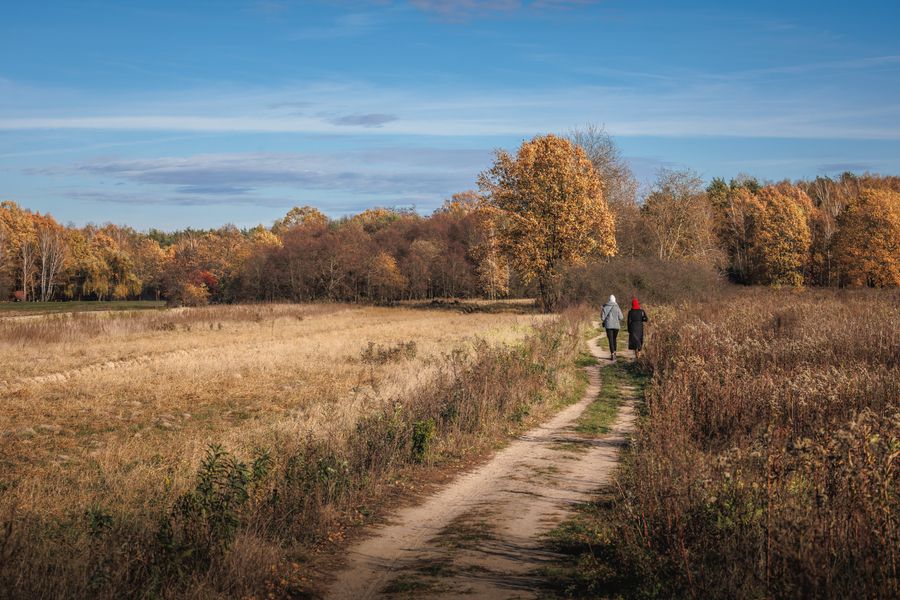
Travel a continent slowly and the striking thing is how rarely anything changes abruptly. Roof pitches shift by degrees as you move towards wetter weather. The bread changes shape a hundred kilometres before the language does. Alphabets bleed across borders because populations did, and the food in a border town is frequently closer to the food across the line than to the food in its own capital.
These gradients are the actual structure of a region, and they are invisible from the air. A traveller who has crossed the ground knows that a mountain range is a genuine divider and a river usually is not, that a language boundary can sit fifty kilometres inside a national one, and that the transition between two supposedly opposite cultures is generally a long, gentle slope with a great many people living on it.
The arithmetic is less lopsided than it looks
The obvious objection is time, and the objection is largely correct. Overland travel over long distances is slower and there is no way to argue that away. But the comparison people make is usually flight duration against ground duration, and that is not the honest comparison.
A flight carries a substantial fixed overhead at both ends: getting to an airport that is usually well outside the city, arriving early enough for the process, moving through it, waiting, and then repeating a version of the same at the other end. Trains and buses tend to start and finish in the middle of towns, which removes most of that. Over short and medium distances this can close the gap entirely, and over some routes it closes it in favour of the train.
Beyond a certain range the arithmetic stops being close and the flight simply wins on time. The overland case then rests on something else: that the hours are not dead time. A night on a train is a night of accommodation and a night of travel simultaneously, and a day at a window is not the same kind of hour as a day in a departure lounge.
The dull stretches are part of the mechanism, not a flaw
It would be dishonest to describe overland travel as continuously interesting. Long stretches are monotonous: industrial outskirts, flat agriculture, an hour of pine forest that looks exactly like the previous hour of pine forest. Anyone selling this as a permanently scenic experience is selling something.
The monotony is doing work, though. It is what makes distance feel like distance. If every hour were spectacular, the six hours would compress in memory the way a flight does, and you would arrive with a sense of having been transported rather than having travelled. The dull middle is the part that installs the scale.
It also produces the specific state of mind that people who like slow travel are actually describing when they use vaguer words. There is nothing to do, nothing can be done, and the day is committed. That enforced idleness is unusual enough in ordinary life to be worth something on its own.
What the memory looks like afterwards
People who travel this way tend to report the same thing, and it is not that the journey was pleasant. It is that they can still recall it in order. The sequence of a long ground journey survives in memory as a sequence, with a beginning and a middle, in a way that a flight does not.
So the honest summary is a trade rather than a virtue. You spend time, comfort and flexibility, and you receive scale, continuity and a journey you will still be able to describe in ten years. Whether that is worth it depends entirely on how much of either you have to spare.
Common questions
Is overland travel always better for the environment?
Generally, yes for rail and coach over comparable distances, though the size of the difference depends on how the electricity is generated, how full the vehicle is, and what the alternative would have been. Ferries and single-occupancy driving complicate the picture considerably, so the blanket claim is weaker than it is often stated.
How much extra time should I budget for a ground route?
Rather more than the sum of the scheduled journeys, because the risk is in the connections rather than the legs. A route with three changes has three chances to unravel, and the usual advice — do not book the last connection of the day, and do not book anything unrefundable at the far end — exists because that is where people get caught.
Does this only work in places with good rail networks?
It works most easily there, but buses cover a great deal of ground elsewhere and are often the primary long-distance network rather than a fallback. The experience is different, the comfort is variable and the routes are frequently more interesting, since buses serve places the railway never reached.
Consumer editor, The Next Postcard
Pranav joined to cover cities, slow routes, rail & road and stayed for the awkward questions and is happiest when a piece answers the question completely.


