
Cities
Where a city lets you sit for nothing says who it is for
Somewhere to sit without buying anything is the cheapest infrastructure a city can provide, and whether it provides it decides who can spend time outdoors.
By Arjun Nair4 min read
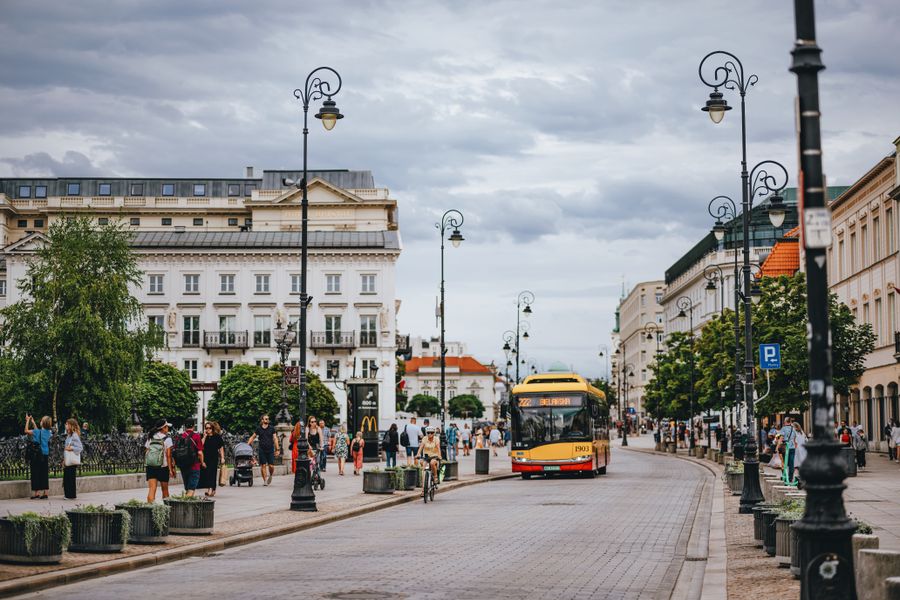
Seating is the entry fee to public space
Standing is fine for a few minutes and becomes the deciding factor after twenty. Whether a square is usable therefore depends on whether you can stop in it without a transaction, and that turns a bench into a piece of infrastructure rather than street furniture. It also happens to be the cheapest infrastructure a city ever installs.
The people for whom this matters most are the ones least likely to complain about it: older people, people with young children, people carrying shopping, people recovering from illness, and anyone whose day is structured around distances that need breaking up. For them the presence of somewhere to sit determines how far from home the city extends.
Once you start counting seats, the map of a city changes shape. Districts that felt welcoming often turn out to be well supplied, and districts that felt subtly unfriendly turn out to have nothing to sit on for six hundred metres in any direction.
Some cities sell the seat and some give it away
In much of southern Europe the terrace is the seat, and the price of a coffee is understood to buy an hour of table. That arrangement works, and it is genuinely sociable, but it is a paid arrangement dressed as a public one and it excludes anyone who cannot or does not want to buy something.
Elsewhere the balance is different. Cities with a strong tradition of municipal provision put benches along routes rather than only in parks, and seating on an ordinary residential street rather than a scenic one is the real signal, since a bench with a view is for visitors and a bench outside a chemist is for residents.
Neither model is simply better and the trade is worth stating plainly. Terrace culture creates lively streets and puts the maintenance cost on businesses; municipal seating is free at the point of use and costs the city money to install, clean and repair for as long as it stands.
Steps, walls and edges are what people actually use
Watch a busy square and most people are not on the benches. They are on the low wall around a planter, on the steps of a building, on the edge of a fountain, on a bollard. Any horizontal surface at roughly knee to hip height gets used, whether it was intended to be sat on or not, and this informal seating usually outnumbers the formal kind several times over.
This is why the design of edges matters as much as the provision of chairs. A planter with a broad flat rim invites people to stay; the same planter with a sloped or ridged top does not, and both cost about the same to build. The decision is rarely an accident.
Orientation matters as much as quantity. Seating that faces the flow of people is used far more than seating that faces a wall, and in hot climates the only benches occupied in the afternoon are the ones in shade, which means a bench in the wrong place is functionally not a bench at all.
The argument about deterrent design is not settled
Armrests dividing a bench into single seats, seats angled so that nobody can lie on them, studs on ledges, and the removal of seating from stations and underpasses are all common, and they are all defended on the same grounds: that they prevent rough sleeping, loitering or antisocial behaviour in specific problem locations.
The counterargument is that these measures do not solve the problem they name, they relocate it, while simultaneously removing something that everybody else needed. Critics point out that a bench nobody can sleep on is also a bench an elderly person struggles to get up from.
This is genuinely contested and involves real trade-offs about safety, maintenance cost and who a public space is for. It is not the business of a travel piece to settle it, but it is worth knowing that when you notice these details you are looking at a policy decision rather than a design accident.
Counting seats is a fast way to read a district
Try it for one walk. Note every place you could sit without paying, and note how many people are using each. What you get is a rough measure of how much a district expects people to linger, and the number correlates loosely with a lot of other things: shade, drinking water, public toilets and safe crossings tend to arrive together or not at all.
Transport interchanges are the sharpest test, since a station with nowhere to wait is telling you exactly what it thinks its passengers are there to do. So is a park with a magnificent lawn and no seat within sight of it.
This is not a scoring system and it does not rank cities against each other. It is a way of noticing something present everywhere and normally invisible, which is roughly what travelling attentively consists of.
Common questions
Why do so many stations have so little seating now?
Explanations offered usually combine crowd flow, cleaning costs, security and a preference for keeping passengers moving toward retail. Whatever the reason in a given station, the effect falls hardest on people who cannot stand comfortably for long, which is why it draws consistent criticism from accessibility campaigners.
Is it acceptable to sit at a cafe table without ordering?
Almost universally not, and in terrace cultures it is a clear breach rather than a grey area, because the table is the product being sold. The equivalent free option is usually a nearby square, a church step or a park, and residents know exactly where those are.
Does more seating not simply attract loitering?
It attracts people staying longer, which is what the seating is for and which is also the thing some authorities want to prevent in particular locations. Whether that presence is a benefit or a nuisance depends heavily on the place and on who is being asked, and the disagreement is real.
Features writer, The Next Postcard
Arjun has written about cities, slow routes, rail & road for most of the last decade and prefers a plain explanation to a clever one.


