
Cities
A second city explains a country better than its capital does
Capitals are shaped by national institutions that distort everything around them, while the next city down is usually built on whatever the country actually does.
By Daniel Okonkwo4 min read
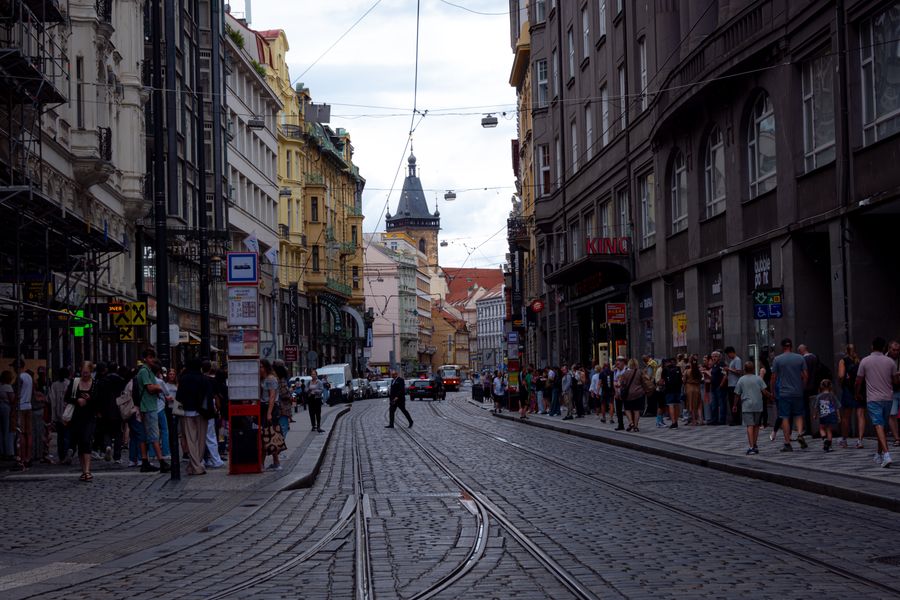
A capital is a national object standing in a local place
A capital city hosts the machinery of a whole country: ministries, courts, embassies, head offices, broadcasters and the people who service all of them. Those institutions are not there because of anything about the local economy, and they employ people drawn from everywhere, so a substantial slice of the city has no particular relationship to the region it sits in.
That produces a recognisable set of effects. Housing costs are pushed up by salaries set nationally rather than locally. Restaurant and cultural provision is unusually broad because the customer base is unusually mixed. Foreign languages are more widely spoken, which makes the city easier to move through and simultaneously less representative of the country around it.
None of that makes a capital a bad place to visit. It makes it a poor sample. Conclusions about a country drawn entirely from its capital are conclusions about one district of that country which was deliberately built to be unlike the rest.
Second cities are usually built on one thing
The city that ranks second is normally there because of a resource, a river mouth, a coalfield, a textile trade, a shipyard or a junction. It grew for a reason you can still see, and that reason has shaped the street plan, the housing stock, the accent, the food and the politics in ways that are legible on a walk.
Where the industry has gone, the shape it left behind is even more informative. Warehouses converted or derelict, a dock basin with no ships in it, a mill district turned into flats, a station far too grand for the traffic it now carries — these are the physical record of an economy that changed, and no capital shows it so plainly because a capital rarely depended on a single trade.
This is also why second cities tend to have strong civic identities and a certain sharpness about the capital. Rivalry of that kind is a genuine social fact rather than a joke arranged for visitors, and it usually has a specific historical grievance underneath it that somebody will happily explain at length.
The pattern has real exceptions, and they matter
Plenty of countries have a capital that is also the port, the industrial centre and the largest market by a wide margin, in which case there is no meaningful second city and the argument collapses. City-states obviously have none at all.
There are also planned capitals, built from nothing to be administrative centres, which are the extreme case of the distortion described here and are frequently strange places to visit for exactly that reason. And some countries split functions deliberately, putting the legislature in one city, the courts in another and the money in a third, which spreads the effect around instead of concentrating it.
So the claim is not a rule. It is a caution about sampling, and the corrective is simply to visit more than one city before saying anything general about a country.
What this means for the practicalities of a visit
Second cities are usually cheaper, less crowded and easier to move around, since the infrastructure was often built for a larger population than the city now has. Museums are frequently excellent and quiet, because civic pride and industrial money built them at a moment of confidence and the collections stayed put afterwards.
The trade is real, though. Fewer people will speak your language, fewer places will be geared to a visitor, and information may exist only in the local language or only on paper. That is exactly the same friction as the reward, viewed from the other side.
Connections are worth checking early rather than assumed. Many countries are organised radially, so the direct link between two second cities can be far worse than the route through the capital even where the map suggests the opposite.
Reading the relationship between the two
The most interesting thing is not either city alone but what passes between them. Look at what the fast train carries and at what time of day, whether the flow is commuters or day trippers, and which direction young people move in for work. That balance describes an economy more directly than any figure on a plaque.
Newspapers make it audible. A country with a genuinely national press reads differently from one where the second city has its own paper with its own view of national affairs, and the second arrangement usually indicates a real regional political culture rather than a decorative one.
Regional languages complicate the picture in the best possible way. Where the second city sits in a region with its own language, the relationship with the capital is not merely economic, and the signage, the schooling and the broadcasting will all show it within minutes of arriving.
Common questions
How do I work out which city is the meaningful second one?
Population rankings are a starting point and can mislead, because a large dormitory suburb may rank high without being a distinct city at all. Look instead for somewhere with its own newspaper, its own university, its own football rivalry and its own airport, which together indicate a genuinely separate centre.
Is it better to base myself in the second city and day-trip to the capital?
It works well where the two are within a comfortable rail journey and where the capital is expensive, and it buys cheaper nights and quieter evenings. The cost is that you will see the capital only in its daytime visitor mode, which is precisely the mode that misleads.
Do these cities have enough to fill several days?
Generally yes, though the material is different: fewer set-piece sights, more industrial heritage, more ordinary civic life and often a stronger food scene relative to price. If your measure of a city is a checklist of monuments, a second city will feel thin.
Deputy editor, The Next Postcard
Daniel writes about cities, slow routes, rail & road, mostly the parts other people skip and is unreasonably interested in the detail nobody else checks.


