
Coast
A beach is a moving thing and the sand arrived from somewhere
Shorelines are a running balance between sediment arriving and sediment leaving, which is why beaches change shape by season and occasionally disappear.
By Pranav Kulkarni3 min read
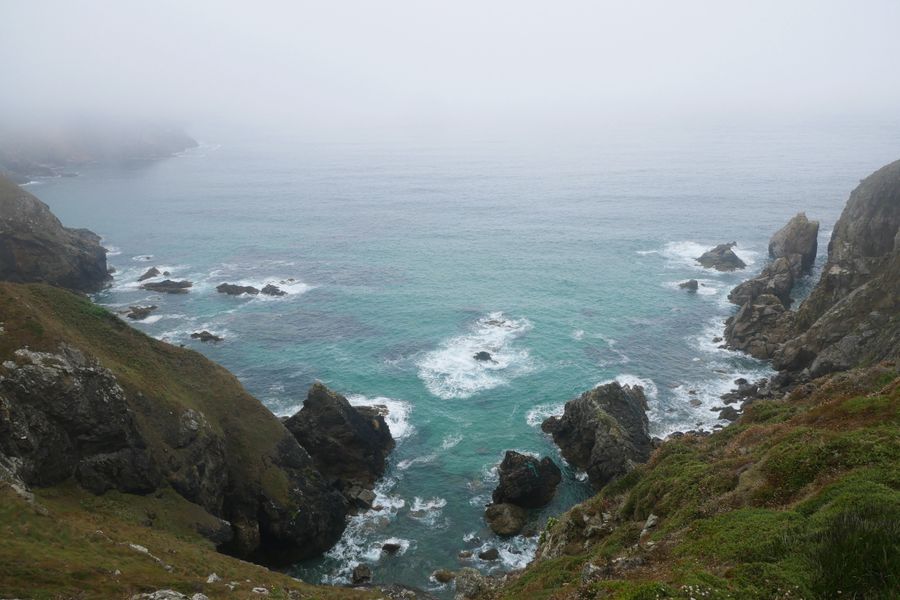
A beach is a balance, not a place
It is natural to think of a beach as a fixed feature that occasionally gets damaged. It is better understood as an account: sediment is being delivered by rivers, cliffs and the sea bed, and it is being carried away by waves and currents, and the beach you stand on is whatever balance those two processes have reached this week.
Because it is a balance rather than an object, a beach responds to changes in either side of the ledger. Reduce the supply or increase the removal and the beach narrows, sometimes within a single season, sometimes over decades.
This also means the sand is not local in the way people assume. Much of it has travelled, sometimes a considerable distance, and the composition of a beach is a decent clue to where it came from and what it was before.
Sediment moves along the coast, not just up and down it
Waves rarely arrive exactly square to the shore. They come in at an angle, run up the beach at that angle and drain back straight down under gravity, and the net effect is that each wave nudges sand a short distance sideways. Repeated endlessly, this moves enormous volumes of material along a coastline.
That process explains a great deal of what you see. Spits reaching across river mouths, sand piling against one side of a headland, harbours that require constant dredging on one flank and nowhere else — all are consequences of material travelling in a consistent direction.
It also means a beach can be starved by something that happened kilometres away. Interrupt the flow upstream along the coast and the beaches downstream lose their supply while the removal continues at the same rate.
Beaches have a summer shape and a winter shape
The seasonal cycle is one of the more striking things about a temperate coast. Long low swells in calm months push sand up the beach and build a wide, gently sloping profile; short steep storm waves in winter pull that sand offshore into bars beneath the surface.
The material has not been lost. It is sitting in the shallows a little way out, and in most cases the calmer months move it back up again, restoring something close to the previous shape. A beach that looks destroyed in February can be entirely normal by June.
What breaks the cycle is when the return does not happen, either because the storms were severe enough to move sediment beyond the range that fair-weather waves can recover, or because the supply that used to top up the system is no longer arriving.
Most modern change has a human cause somewhere in the chain
Rivers have historically been the main delivery mechanism for sand, and rivers that are dammed, embanked or dredged deliver much less of it. The beach at a river mouth may be responding to decisions taken far inland and long ago, which makes the cause invisible from the shore.
Coastal structures do something more localised. Anything built across the drift — a groyne, a breakwater, a marina wall — traps material on one side and starves the other, which is why you often see a wide beach on one flank of a structure and a scoured one immediately beyond it.
Replenishment, where sand is pumped or trucked back onto an eroding beach, is now routine in many places. It works, it is expensive, and it has to be repeated, because it treats the deficit rather than the process producing it. Whether that is a sensible use of public money is genuinely argued over.
What this means for someone choosing a beach
Photographs are usually taken at the widest moment of the year, which is worth remembering when a beach in a brochure turns out to be a strip of shingle in April. The difference is not deception so much as a seasonal profile behaving normally.
Sediment type tells you what to expect underfoot and in the water. Fine pale sand generally means a long history of transport and sorting; coarse sand and shingle mean a steeper beach, a sharper drop into deeper water and often stronger backwash.
And a beach with recent hard defences behind it, or with regular replenishment, is one where the balance has already broken. That is not a reason to avoid it. It is a reason to expect the shape you find to be the product of maintenance rather than of nature, and to read the coast either side of it for the evidence.
Common questions
Why is the sand a different colour on beaches that are close together?
Because it comes from different sources. Pale quartz sand, dark volcanic sand, golden shell-derived sand and grey granitic sand reflect the rock and biology upstream in the sediment system, and two adjacent bays can be fed by entirely separate supplies.
Are disappearing beaches always caused by sea level change?
No, and attributing every case to it obscures the more immediate causes. Sediment starvation from dammed rivers, interruption of drift by structures, and extraction of sand are all major factors, and they often act faster than sea level does. The processes interact rather than compete.
Is it a problem to take a pebble or a shell home?
Individually it is negligible, and collectively it is not, which is why a number of coastal areas now prohibit it outright and enforce the rule. Where a beach is small, protected or already eroding, the local rule exists for a reason and is worth checking before filling a pocket.
Consumer editor, The Next Postcard
Pranav joined to cover cities, slow routes, rail & road and stayed for the awkward questions and is happiest when a piece answers the question completely.


